Home Event types Conferences & trade shows
Jersey printing at conferences and trade shows
Show floors are a fight for attention against a hundred other booths. A station where something physical is made with the visitor’s own name on it is one of the few draws that still stops people who have already seen everything.
Why it beats the usual booth mechanics
The drawPrize wheels, raffles and coffee bars all work in the sense that they attract bodies. What they do not do is hold a visitor long enough for a real conversation, or send anything home that survives the flight.
A personalization station changes both. The visitor is standing at your booth for several minutes, in a good mood, with a reason to talk. And what they take away is not a tote full of leaflets — it is a garment with their own name on it that they will actually put on.
There is a secondary effect worth mentioning to whoever signs off the booth budget. Every visitor who walks the rest of the show floor wearing a jersey made at your booth is carrying your mark past every other exhibitor for the remainder of the day. Nobody has to be persuaded to do this; they do it because they like the jersey.
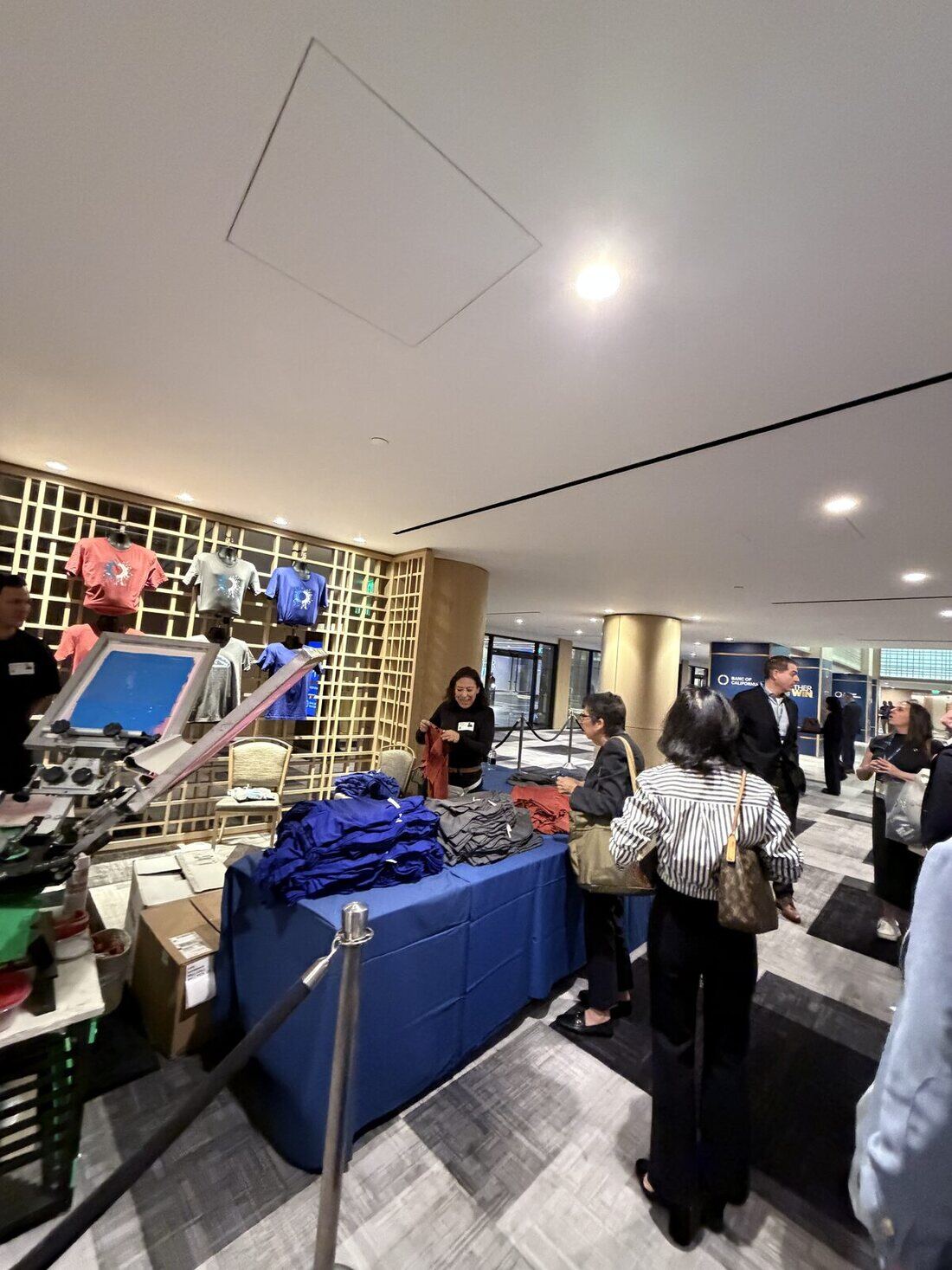
Fitting a show-floor booth
Space & rulesShow floors are the most constrained environment we work in, and the constraints are contractual as much as physical.
Square footage. A working two-lane build wants roughly a 10×10 with crew room behind the counter. In a 10×10 booth total, that means the station is the booth — which is often the right call, but it needs deciding early rather than being discovered at build.
Power. Show power is ordered in advance and charged aggressively. Get the circuit requirement into your electrical order the first time; adding it on site costs several times as much. We confirm the exact count during scoping so it can go on the form.
Union and general-contractor rules. Many venues restrict who may move freight, run cabling or use the dock. Tell us the show's exhibitor manual rules and our load-in plan will work inside them instead of arguing with a steward at 7am.
Queue containment. Aisles belong to the show, not to you. A queue that spills into the aisle gets shut down by floor management. Orient the counter so the line runs inside your footprint or along its edge.
The one-hour rush
Conference traffic is driven by the agenda. Sessions end, the floor fills, and twenty minutes later it empties again. Plan lanes for the break, not for the exhibit hours. A station that is comfortable for six hours and swamped for four twenty-minute windows is a station that has been sized wrong.
Making it work with lead capture
Booth integrationMost exhibitors want the station tied to a scan. That is straightforward, and there are two clean patterns.
Scan at intake. A visitor's badge is scanned by your team at the tablet counter before they type their name. Simple, and the exchange is obvious to the visitor. The tradeoff is a small amount of added friction right where the queue starts.
Scan at handoff. The visitor is scanned when the finished jersey is handed back. Slightly better feeling, because the conversation happens while they are already holding the thing they came for.
Either way, your staff run the scan and our crew runs the printing. We deliberately do not touch visitor contact data; keeping that boundary clean is simpler for everyone, and it means your show-floor privacy notice does not have to account for a third party.
Worth deciding in advance: whether the station is open to all traffic or gated to qualified visitors. Both are defensible. Gating slows the queue and raises the average conversation quality; open access maximises the number of people wearing your mark around the hall. Pick one before the show rather than improvising at the counter.